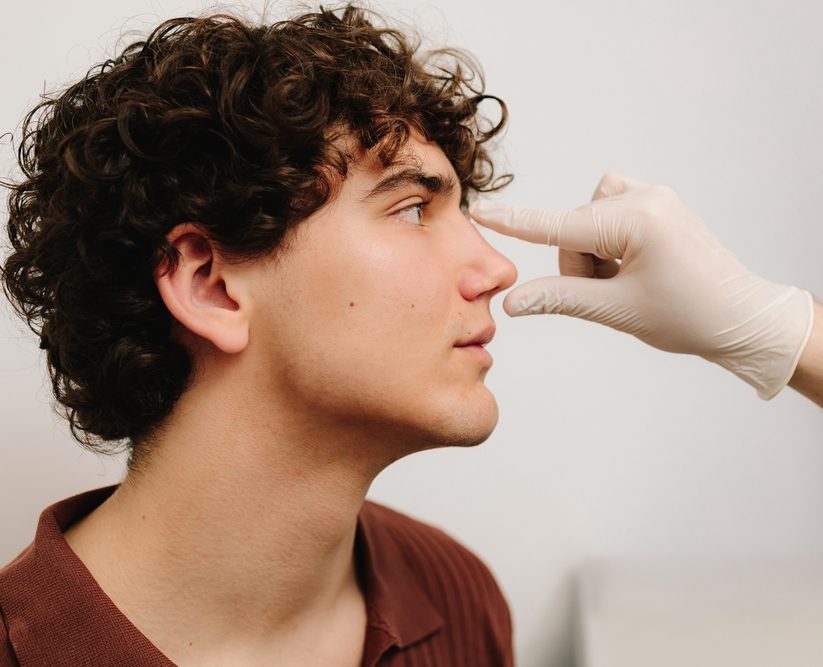
A deviated septum does not directly cause obstructive sleep apnea, but it can make it worse – and in some people, it is a major reason the airway collapses at night. When the wall between your nostrils is crooked, air has to work harder to get through your nose. That extra effort pulls the soft tissues in your throat inward, increases snoring, and can turn mild breathing problems into full breathing pauses.
At Texas Sinus and Snoring in Spring, TX, our team evaluates the entire airway – from the tip of the nose to the base of the tongue – to determine whether a structural issue like a deviated septum is driving your sleep-disordered breathing.
What Is a Deviated Septum?
Your nasal septum is the wall of cartilage and bone that separates your right and left nasal passages. Ideally, it sits right down the middle, giving each side an equal airway. In reality, almost nobody has a perfectly straight septum – studies suggest the majority of adults have some degree of deviation.
A deviated septum becomes a medical issue when the shift is big enough to block airflow. Some people are born with it. Others develop it after a sports injury, a fall, a car accident, or a minor childhood bump that never seemed serious.
What Is Sleep Apnea?
Sleep apnea is a serious sleep disorder where breathing repeatedly stops and starts during sleep. These pauses can last ten seconds or longer and happen dozens – sometimes hundreds – of times a night without you remembering any of it. Each time, the brain briefly wakes you to restart breathing, preventing deep, restorative sleep.
The Connection Between a Deviated Septum and Sleep Apnea
Your nose warms, filters, and humidifies air, and it creates a specific amount of resistance that helps keep the rest of the airway open and stable. When the septum is crooked – and especially when you lie down and muscles relax – that system gets thrown off.
Higher nasal resistance. A narrowed passage forces you to generate more suction with each breath. That negative pressure travels down the airway and pulls the soft palate, tongue base, and throat walls inward. It is like drinking a thick milkshake through a very narrow straw.
Mouth breathing. The mouth takes over, shifting the jaw and tongue backward and narrowing the space behind the tongue. It also dries the throat, making tissues stickier and more prone to vibrate and collapse.
Fragmented sleep. Even without full apnea events, the effort of breathing through a blocked nose causes micro-arousals. You never settle into deep, restorative sleep.
More snoring. Turbulent airflow through a narrow passage produces vibration and noise. Snoring is often the first sign the airway is under strain.
How a Deviated Septum and Obstructive Sleep Apnea Are Connected
A deviated septum usually acts as an amplifier rather than the sole cause. OSA is typically driven by anatomy at multiple levels – the nose, soft palate, tonsils, tongue base, and jaw position – plus body weight, alcohol use, and sleeping position.
The septum sits at the top of that chain. Think of the airway as a straw or a tunnel: pinch the entrance, and the walls further down collapse more easily under the increased suction. The septum itself does not collapse – it creates the conditions that make throat collapse more likely.
Research consistently shows that people with significant nasal obstruction have higher rates of snoring and disrupted sleep – and that patients who cannot breathe through their nose often struggle to tolerate CPAP, a first-line treatment for moderate to severe OSA.
That is why Dr. Ben Cilento evaluates the whole airway rather than one spot, and why our practice offers a full range of treatment options – from nasal procedures such as septoplasty, turbinate reduction, and nasal valve reconstruction, to airway treatments like Inspire sleep therapy, and oral appliances.
Diagnosis and When to Seek Help
Schedule an evaluation if you notice any of the following:
A bed partner reports that you snore loudly, gasp, choke, or stop breathing
You feel unrefreshed after seven or eight hours of sleep
You fall asleep easily during quiet activities or while driving
You breathe through your mouth most nights
One nostril is consistently blocked
You have high blood pressure that is difficult to control
A proper workup includes a detailed history and physical exam of the nose and throat, often with an in-office nasal endoscopy – a small camera that directly visualizes a deviated septum, enlarged turbinates, or other sources of obstruction. If apnea is suspected, sleep testing follows. Texas Sinus and Snoring offers an at-home sleep study, so you sleep in your own bed while a small device records breathing patterns, oxygen levels, and heart rate – more comfortable and more representative of a typical night than a lab.
Living With Sleep Apnea and a Deviated Septum
Living with both conditions is exhausting, and it affects work, relationships, and daily enjoyment. But these are treatable medical conditions – and small habits make a measurable difference.
Keep the nose clear year-round. Spring’s pollen seasons are long and overlapping. Daily saline rinses and consistent allergy control keep swelling down so your results hold.
Protect your sleep schedule. Consistent bed and wake times reduce the sleep debt that makes apnea symptoms feel worse.
Watch alcohol and sedatives. Both relax throat muscles and increase the number and length of breathing pauses.
Sleep on your side. Gravity pulls the tongue backward when you lie on your back; side sleeping alone can cut event counts significantly.
Use your therapy every night. Whether CPAP, an oral appliance, or an implanted device, consistency is what protects your heart and brain over time.
Follow up. Airways change with weight, age, and allergies. Periodic reassessment – including repeat sleep testing when symptoms shift – keeps treatment matched to your current anatomy.
Loop in your partner. The person next to you often notices changes first, and their observations are genuinely useful clinical information.
Breathe Better, Sleep Better
So, can a deviated septum cause sleep apnea? Not on its own for most people – but it raises nasal resistance, promotes mouth breathing, worsens snoring, and makes CPAP harder to tolerate, all of which can push a borderline airway into apnea territory. Their symptoms overlap enough that a specialist’s evaluation is the only reliable way to untangle them.
Treatment ranges from allergy control and oral appliances to septoplasty, turbinate reduction, nasal valve reconstruction, and advanced airway therapies. If you snore, wake up exhausted, or feel like you have never been able to breathe through your nose, a full airway evaluation with Dr. Ben Cilento is the right first step toward restorative sleep.
Schedule Your Airway Evaluation