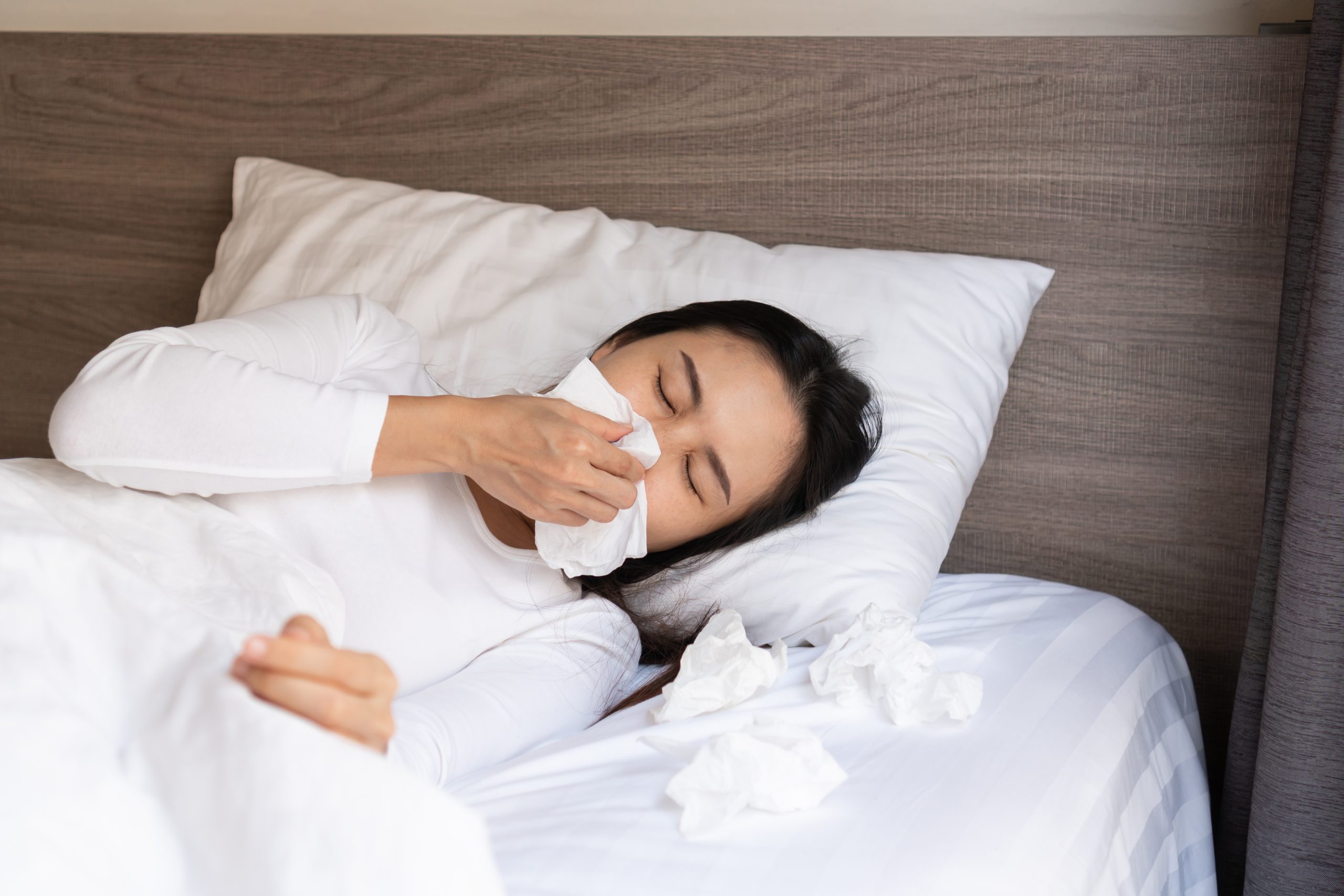
Allergies disrupt sleep by swelling the nasal lining, flooding the airway with mucus, and releasing histamine – a chemical that both clogs the nose and keeps the brain more alert. The result is congestion, postnasal drip, and a blocked upper airway, leading to mouth breathing, snoring, dry mouth, and frequent awakenings. If you wake congested, dry-mouthed, or tired after a full night in bed, the problem often starts in the nose – a familiar reality across the Spring, TX, area.
Understanding the Link Between Allergies and Sleep
Allergies are immune reactions: the body treats a harmless trigger as a threat, produces immunoglobulin E (IgE) antibodies, and releases histamine and other chemicals. Those chemicals cause itching, sneezing, a runny or blocked nose, and sinus pressure – and at night they change how air moves through your nose and how deeply you sleep.
The Connection Between Allergies and Sleep Problems
When you encounter pollen, dust mites, mold, or pet dander, histamine causes blood vessels in your nasal passages to dilate and increases mucus production, creating nasal congestion. A blocked nose makes nasal breathing difficult, so you switch to mouth breathing – which is less efficient and leads to:
Snoring: Air struggling through a partially obstructed airway makes throat tissues vibrate.
Dry mouth and sore throat: All-night mouth breathing dries oral and pharyngeal tissues.
Frequent awakenings: The effort to breathe, plus post-nasal drip, coughing, or throat clearing, pulls you out of deep sleep – even if you do not fully remember waking.
Why Allergies Are Worse at Night
Allergies often feel stronger after dark even when the same triggers were present all day. Cortisol, a natural anti-inflammatory hormone, is at its lowest at night, so nasal tissue can swell more. When you lie down, extra blood pools in the nasal lining and gravity no longer drains mucus – it pools in the sinuses or drips down the throat.
Your bedroom also concentrates the allergens you spend seven to eight hours with, face on a pillow.
Common Nighttime and Morning Allergens
Dust mites: Microscopic creatures that thrive in warm, humid environments and feed on dead skin cells. They live in mattresses, pillows, comforters, carpets, and upholstered furniture; their waste becomes airborne when you roll over or make the bed.
Pet dander: Dead skin flakes, saliva, and urine accumulate on bedding, floors, and furniture. Dander is light, sticky, and hard to remove with a regular vacuum – even if the pet is not allowed on the bed.
Pollen: Trees, grasses, and weeds are major Spring-area triggers. Oak and other tree pollen rises in spring; grasses follow, and ragweed is heavy later in the year. Pollen rides in on clothes, hair, and shoes, or through open windows, then settles on bedroom surfaces.
Mold: Spores grow in damp bathrooms, basements, closets, under beds, around windows, HVAC systems, and even in pillows and mattresses. Gulf Coast humidity gives mold an easy climate; a slightly musty room is a clue.
Cockroach debris and indoor irritants: Scented candles, fabric sprays, and dusty ceiling fans add to the load. Morning symptoms often reflect what you breathed all night, not a new problem that started at sunrise.
Allergies and Sleep Apnea
Allergies do not cause every case of sleep apnea, but they can worsen obstructive sleep apnea (OSA). In OSA, the airway repeatedly becomes blocked, causing breathing to stop for short periods – sometimes hundreds of times a night – which lowers oxygen and fragments sleep.
Allergies contribute in two main ways:
Increased airway resistance: Congestion forces the body to work harder to pull air in, creating negative pressure that can collapse soft tissue in the palate and tongue.
Mouth breathing: When you cannot use your nose, the jaw and tongue fall backward, narrowing the pharyngeal airway and making collapse more likely.
People with both allergic rhinitis and OSA often notice apnea symptoms flare when pollen counts rise or indoor dust is high. Treating the nose will not replace apnea care, but a clearer nasal airway reduces strain and makes other therapy easier to use.
Warning signs that go beyond simple allergy include:
Gasping or choking during sleep
Witnessed breathing pauses
Morning headaches
Severe daytime sleepiness
Evaluation often begins with an at-home sleep study, which monitors breathing patterns in your own bed. If sleep apnea is present, Dr. Ben Cilento may recommend an oral appliance, positional therapy, or other sleep therapies offered at the practice. He looks at the allergy, the nasal structure, and the sleep pattern as connected problems rather than isolated symptoms.
Managing Allergies for Better Sleep
Over-the-counter remedies can ease symptoms temporarily, but lasting relief comes from identifying triggers and treating both the allergic reaction and any structural blockage. You cannot control every pollen grain in Spring – but you can lower your nighttime dose and calm the response that follows.
How to Stop Allergies at Night and Manage Morning Symptoms
A consultation with an ENT specialist like Dr. Ben Cilento is the most effective place to start. A thorough history and exam can pinpoint whether symptoms come from allergies, a deviated septum, large turbinates, weak nasal valves, or a combination.
Allergy testing shows whether dust mites, mold, pets, or specific pollens are driving symptoms. From there, a targeted plan may include:
Medication management: Prescription-strength nasal steroid sprays to reduce inflammation, plus newer-generation, non-drowsy antihistamines. Use sprays daily during your trigger season; ask your clinician before combining products to avoid duplicating ingredients.
Immunotherapy: Allergy shots or sublingual drops gradually expose your body to small amounts of allergen, training the immune system to react less. This addresses the root cause, not just the stuffiness – a longer-term plan, not an overnight fix.
ClariFix® Cryotherapy for lasting relief from chronic rhinitis;
Septoplasty or balloon sinuplasty when a crooked septum or blocked sinuses limit airflow;
Turbinate Reduction when medicine alone cannot open the airway.
Evening and morning habits that support treatment:
Shower and wash your hair before bed so pollen does not transfer to the pillow.
Leave outdoor clothes out of the bedroom; take prescribed allergy medicine on schedule, not only after you already feel blocked.
Run a saline rinse or use a neti pot before bed – and again after you wake – then spend a few minutes upright so drainage can start.
Keep pets off the bed and, ideally, out of the bedroom if dander is a trigger.
If you wake with a headache across the cheeks or a bitter drip in the throat, the nose was working against you for hours.
Tips for Allergy Relief and Better Sleep
Sleep with your head slightly elevated so nasal blood flow does not pool as much.
Keep a clean sleep environment: wash bedding in hot water, use allergen-proof covers, and consider removing bedroom carpet.
Use a HEPA air purifier to capture pollen, dander, and dust mites.
Keep windows closed on high-pollen days in the Spring area, especially at night, and rely on air conditioning.
Replace or clean HVAC filters on schedule so the system does not recirculate the same allergens.
Use a clean humidifier only if the air is dry; in humid months, Spring-area homes often need dehumidifying more than humidifying.
Avoid heavy fragrances in the bedroom – irritants and allergens stack.
Track symptoms against pollen counts and indoor changes for two weeks; patterns guide the next step.
Optimizing Your Bedroom Environment
You spend roughly a third of your life in bed, so bedding is a critical control point:
Encase the mattress, box spring, and pillows in zippered, allergen-proof covers made from tightly woven fabric.
Wash sheets, pillowcases, blankets, and bedding weekly in water at 130°F or hotter – the temperature needed to kill dust mites – then dry them completely.
Choose washable synthetics and hypoallergenic pillows over down, feathers, or heavy comforters, which harbor allergens and break down into dust.
Replace pillows that smell dusty or have been used for years.
Remove stuffed animals, extra throw pillows, and decorative shams; fewer fabrics mean less reservoir.
If you are allergic to pets, wash bedding more often. A lint roller is not enough – dander is too fine.
Conclusion
Allergies trigger inflammation that leads to nasal congestion, drip, cough, mouth breathing, snoring, and fragmented sleep. Nighttime exposures (dust mites, dander, mold, leftover pollen) make symptoms worse once you lie down, and a blocked nose can amplify snoring and obstructive sleep apnea. Control the bedroom, identify true triggers, and treat both the allergic reaction and any structural blockage so air can move through the nose again.
When congestion, snoring, or unrefreshing sleep persist, an evaluation that looks at allergies and the airway together is the practical next step toward reclaiming your nights.