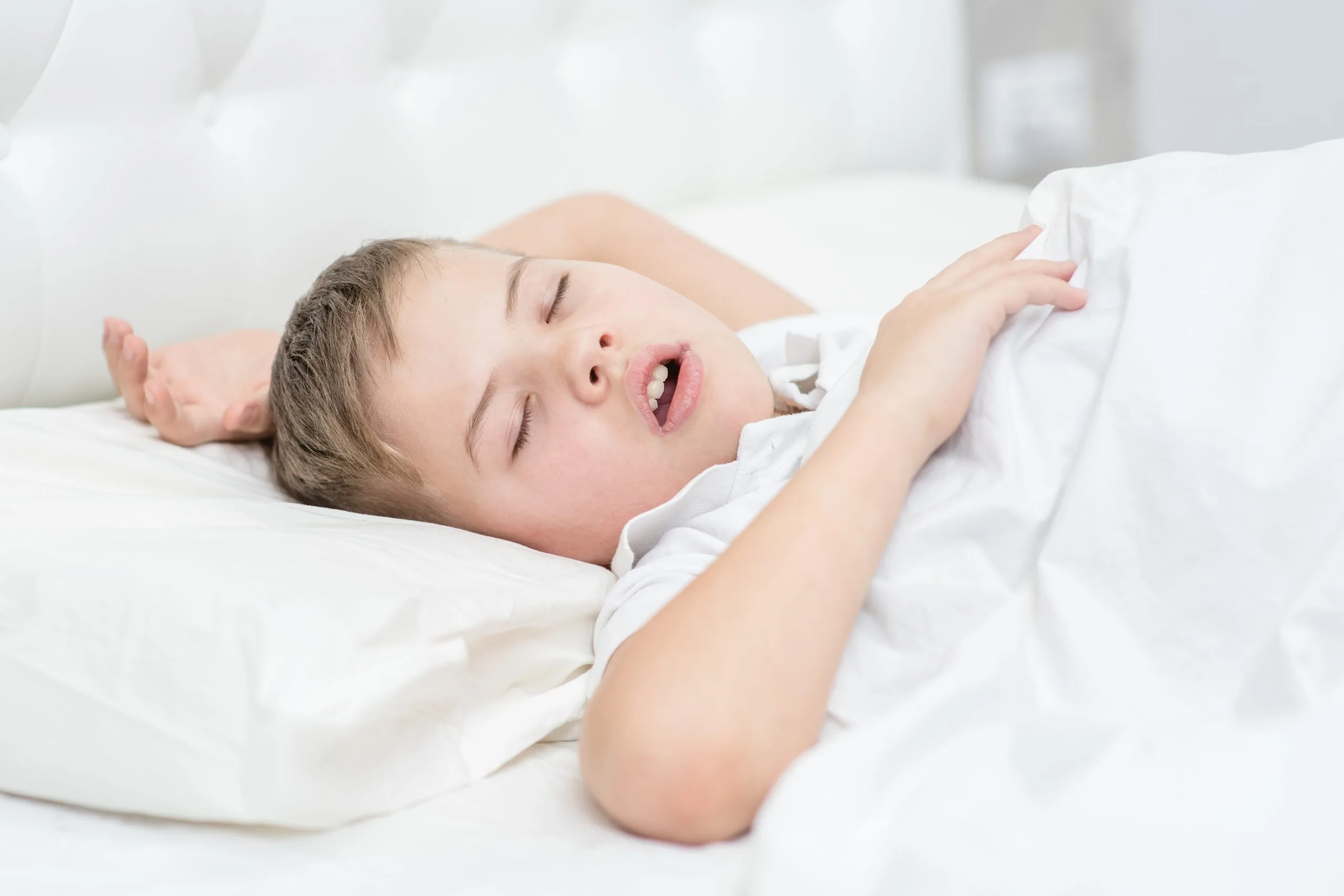
For Houston-area parents, occasional light snoring can be normal, but persistent or loud snoring – often from enlarged tonsils and adenoids, allergies, congestion, or nasal obstruction – can signal obstructive sleep apnea that affects sleep, mood, growth, and school performance. See an ENT when snoring is frequent, very loud, or paired with pauses in breathing, restless sleep, or daytime problems.
Understanding Snoring in Children
What Is Snoring?
Snoring is the sound produced when airflow is partially blocked during sleep. As air tries to move through a narrowed airway in the nose, mouth, or the back of the throat, surrounding soft tissues vibrate. The sound can range from soft and quiet to loud and disruptive.
How Common Is Snoring in Kids?
Primary snoring – snoring without breathing pauses or sleep disruption – is fairly common, especially with a cold.
Studies show that up to 27% of children snore from time to time
Mild snoring that fades as illness clears is common
Habitual snoring (three or more nights a week) is less common and more likely tied to an underlying medical issue
Nightly snoring that lasts for weeks can mean the airway is narrowed on a regular basis
When Is Snoring in Children Normal?
Light or “simple” snoring during a stuffy nose can be normal. The child still sleeps through the night, and daytime energy and mood stay steady.
Infrequent: Occurs only occasionally, not every night
Quiet: Soft and not easily heard from outside the room
Temporary: Often happens with a cold, stuffy nose from allergies, an allergy flare, or an unusual sleep position
Effortless: The child appears to be breathing comfortably without struggle
Short-lived: Often stops when the cold or allergy flare eases
When Snoring Becomes a Concern
Snoring becomes a concern when it is loud, frequent, habitual, or accompanied by labored breathing. Concern also rises when it lasts beyond a short illness or the airway may be closing during sleep.
Gasping, pauses in breathing, or frequent tossing
Mouth breathing, a return of bedwetting, or trouble focusing during the day
Daytime sleepiness
Causes of Snoring in Children
Several factors can narrow the airway and lead to snoring in pediatric patients. At Texas Sinus and Snoring, we focus on identifying the precise anatomical or inflammatory cause.
Enlarged Tonsils and Adenoids
This is the most frequent cause of persistent snoring and sleep-disordered breathing in children, and a leading cause in school-age children. The tonsils and adenoids are lymph tissues at the sides of the throat and higher behind the nose.
When enlarged, they physically block the airway, especially when a child is lying down
The child may breathe through the mouth and sound congested even when not sick
Chronic Nasal Obstruction and Congestion
Anything that blocks the nasal passages can force a child to breathe through the mouth, which makes throat tissues more likely to vibrate.
Improving nasal breathing is a key part of our treatment approach.
Allergies and Chronic Inflammation
Seasonal, environmental, or year-round allergies can cause persistent inflammation, swelling, and mucus in the nasal passages and throat.
Congestion and snoring often increase during pollen peaks and indoor allergen exposure
Long-term inflammation can also enlarge adenoids
Managing the underlying allergic response is often an effective way to reduce airway obstruction
Obesity and Airway Collapsibility
Excess weight can lead to fatty tissue in the neck and throat, narrowing the airway and increasing the risk of airway collapse during sleep.
This can cause snoring and potentially obstructive sleep apnea
Weight is not the only cause, but it can make other airway problems worse
Craniofacial or Oral Posture Issues
In some children, the structure of the jaw, face, or palate can contribute to a smaller airway. It can signal poor sleep quality with significant effects on a child’s development and well-being.
Impact on Sleep Quality and Daytime Function
When breathing is obstructed, sleep becomes fragmented. The body works harder to get enough oxygen, preventing the brain from reaching the deep, restorative stages of sleep children need for growth. Snoring is the warning sound; apnea is the breathing problem underneath.
If left untreated, sleep apnea can:
Put a strain on the cardiovascular system and heart
Contribute to high blood pressure
Lead to poor or slowed growth
Cause learning difficulties
Worsen behavior that looks like attention problems
Warning Signs: When Snoring Indicates a Problem
Parents should be aware of specific red flags that suggest their child’s snoring is more than a simple noise.
Nighttime Red Flags
Loud, disruptive snoring that occurs most nights
Pauses in breathing (apneas) that last for several seconds, often followed by a snort
Gasping, choking, or snorting sounds during sleep
Very restless sleep, with frequent tossing and turning
Heavy sweating during the night
Sleeping in unusual positions, such as with the head propped up or the neck extended (stretched back)
Mouth breathing
Bedwetting after a child had been dry
Daytime Red Flags
Chronic mouth breathing
Difficulty paying attention, which can be misdiagnosed as ADHD; some children seem restless and impulsive
Morning headaches
Noticeable daytime sleepiness, such as falling asleep in class or on short car rides
Slowed growth or failure to thrive
Hard-to-wake mornings and irritability
Morning dry mouth and a nasal voice
Signs of Obstructive Sleep Apnea
The presence of both nighttime and daytime red flags raises concern for obstructive sleep apnea. Witnessing your child stop breathing for even a few seconds is a clear sign that a specialist evaluation is necessary.
Initial Assessment by a Pediatrician
Your child’s pediatrician is the first stop, especially if snoring is new or tied to a cold. They can perform an initial physical exam, review symptoms, and help determine if the snoring is likely benign or needs a specialist.
Share how many nights it happens, plus any pauses, gasping, and daytime changes
The pediatrician can check for infection, allergies, and large tonsils
Brief snoring with a virus may only need time and supportive care
When to See an ENT Specialist
If your pediatrician has concerns, you notice red flags, or snoring lasts more than a few weeks, is loud most nights, or comes with breathing pauses, see an Ear, Nose, and Throat (ENT) specialist. ENT Surgeon Dr. Ben Cilento examines the nose, tonsils, adenoids, and nasal airway, evaluating the structures of the head and neck to identify the exact point of obstruction so treatment matches the cause.
Sleep Studies and Additional Testing
To confirm a diagnosis of sleep apnea or quantify the severity of sleep-disordered breathing, we may recommend a sleep study. Testing measures breathing, oxygen levels, and sleep quality and helps distinguish simple snoring from obstructive sleep apnea.
In many cases, this can be done with an at-home sleep study, which is often more comfortable for children than an overnight stay in a lab
Allergy evaluation and a nasal exam can show whether congestion is driving the sound
Results guide whether medicine, surgery, or another therapy is the next step
Treatment Options for Snoring in Children
At our Spring practice, treatment is tailored to the specific cause of your child’s snoring.
Watchful Waiting and Monitoring
For children with mild, infrequent snoring and no other symptoms – especially after a cold or temporary illness – we may recommend a short period of observation.
Track how many nights it occurs, plus energy and mood
If the sound fades as the child recovers, no further treatment may be needed
If it stays, move to a focused exam
Medical Management (Allergies, Inflammation)
If allergies or chronic inflammation are the culprits, treatment may involve medications to reduce airway swelling and congestion. We match medicine to the child’s symptoms and exam findings.
Treating congestion and inflammation can reduce throat vibration.
Surgical Treatments (Adenotonsillectomy, Nasal Procedures)
For the many children whose snoring is caused by enlarged tonsils and adenoids, an adenotonsillectomy is a highly effective procedure that can restore airflow. Dr. Ben Cilento may also perform nasal procedures if a nasal obstruction is the primary issue. The goal is a clear, stable airway and improved nasal breathing during sleep.
CPAP and Other Therapies for Persistent Cases
For children with persistent sleep apnea that does not resolve with surgery, or for those who are not surgical candidates, Continuous Positive Airway Pressure (CPAP) therapy may be recommended.
CPAP involves wearing a mask that delivers a gentle stream of air pressure to keep the airway open during sleep
Other supports are considered in selected cases after the exam and, when needed, a sleep study
Lifestyle Changes and Supportive Measures
In cases where obesity is a contributing factor, a physician-guided weight management plan can significantly improve or even resolve snoring and sleep apnea.
Keep a regular sleep schedule
Keep the child active and support a healthy weight
Reduce allergen exposure in the bedroom
Treat nasal congestion early rather than letting mouth breathing become the default
Side sleeping can help some children, though it does not fix a blocked airway on its own
Ensuring Your Child’s Sleep Health
Taking action on pediatric snoring is a proactive step toward supporting your child’s overall health and development.
Importance of Early Intervention
Early diagnosis and treatment can prevent the long-term cognitive, behavioral, and physical health problems associated with sleep-disordered breathing.
Early care protects sleep, learning, and growth
Waiting on loud nightly snoring can let apnea continue
Finding the cause sooner often means simpler treatment and better rest
Addressing the problem when they are young sets them up for healthier sleep into adulthood
Monitoring and Follow-Up
Managing pediatric snoring is a partnership between our team and your family. Consistent follow-up ensures that treatment is effective and allows us to make any necessary adjustments over time. Occasional light snoring with a cold can be harmless, but nightly, loud snoring is often a symptom of a treatable condition – enlarged tonsils and adenoids, nasal obstruction, or allergies – that affects sleep, development, and quality of life.
An evaluation with an ENT specialist can locate the blockage and help your child breathe and rest better.