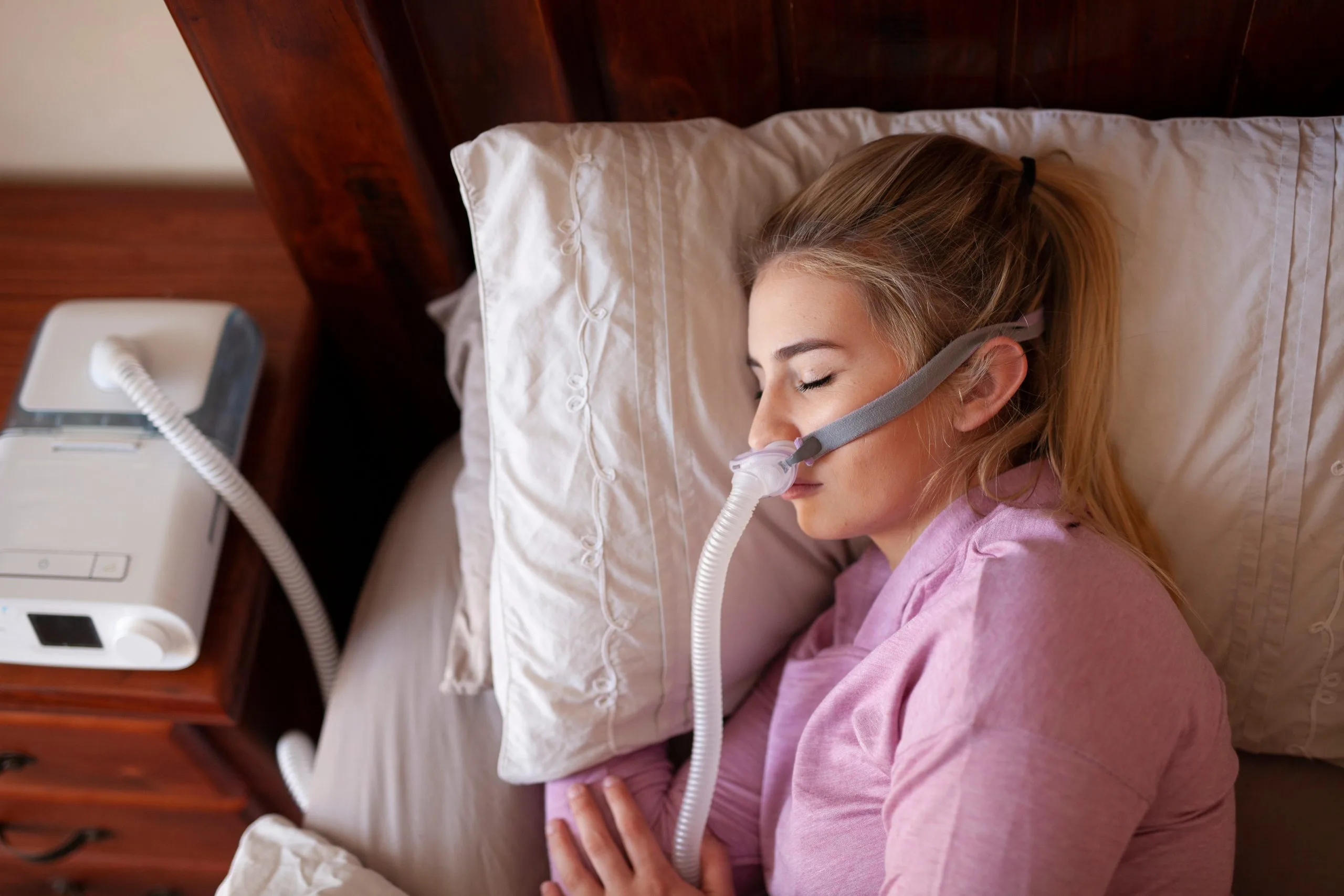
CPAP therapy is the most widely prescribed treatment for obstructive sleep apnea. When used consistently, it can dramatically improve sleep quality by keeping your airway open throughout the night. However, achieving optimal CPAP sleep quality isn’t automatic – many people struggle with masks, noise, and discomfort that prevent them from getting the full benefit.
This guide explores how CPAP therapy works, its benefits, and the modern alternatives available to help you reclaim your rest.
What Is Sleep Apnea?
Sleep apnea is a condition where your breathing repeatedly stops and starts during sleep. The most common form – obstructive sleep apnea (OSA) – happens when the muscles in your throat relax too much and physically block your airway. These pauses in breathing, known as apneas, can last 10 seconds or longer and may occur dozens or even hundreds of times per night, often without the person being fully aware of them.
Many people with sleep apnea don’t realize they have it. A bed partner might notice loud snoring, gasping, or choking sounds during the night. Other signs include waking up with a dry mouth, morning headaches, difficulty concentrating during the day, and persistent fatigue no matter how many hours you sleep.
How Sleep Apnea Affects Sleep Quality
Every time your airway collapses, your brain briefly wakes you to restore breathing. These micro-arousals fragment your sleep cycles, pulling you out of the deep, restorative stages your body needs. The result is that even after eight hours in bed, you may feel like you barely slept at all.
Fragmented Sleep: Frequent micro-arousals prevent the body from progressing through normal sleep cycles.
Lack of Deep Sleep: The body rarely reaches the deep, slow-wave sleep and REM sleep stages crucial for physical repair, memory consolidation, and emotional regulation.
Daytime Hypersomnia: Severe daytime sleepiness as the body tries to compensate for the lack of quality sleep.
Cognitive Impairment: Difficulty concentrating, memory problems, and irritability from chronic sleep deprivation.
Over time, untreated sleep apnea is linked to high blood pressure, heart disease, stroke, type 2 diabetes, weight gain, and mood disorders like depression and anxiety. It can affect every part of your daily life – from your focus at work to your relationships at home.
What Is CPAP Therapy?
CPAP stands for Continuous Positive Airway Pressure. The machine delivers a steady stream of pressurized air through a mask worn over the nose, mouth, or both while you sleep. This air pressure acts like a pneumatic splint, holding your airway open so the soft tissues in the throat don’t collapse. It doesn’t breathe for you – it simply provides the support needed to ensure your own breathing is continuous and unobstructed.
The machine consists of three main parts:
A motor that pressurizes air from the room
A hose that delivers the pressurized air
A mask that fits over your nose, mouth, or both
Modern CPAP devices are quieter and more compact than older models, and many now include features like heated humidifiers, auto-adjusting pressure, and data tracking that records usage hours and apnea events.
Who Needs CPAP Therapy?
CPAP is typically prescribed after a sleep study confirms a diagnosis of moderate-to-severe obstructive sleep apnea. The study measures your apnea-hypopnea index (AHI), which counts the number of breathing interruptions per hour. An AHI of 15 or higher generally indicates moderate sleep apnea, while an AHI of 30 or more is considered severe. Even some patients with mild sleep apnea may benefit from CPAP if they have significant daytime sleepiness or other health conditions that sleep apnea could worsen.
At Texas Sinus and Snoring, we offer the convenience of an at-home sleep study, allowing you to get an accurate diagnosis from the comfort of your own bed. Dr. Ben Cilento evaluates each patient’s unique anatomy and symptoms to determine if sleep apnea is present and whether CPAP is the appropriate initial treatment.
Benefits of CPAP for Sleep Quality
Improved Sleep Quality
When CPAP keeps your airway open, those constant micro-arousals stop. Your brain can cycle through all the stages of sleep, including deep slow-wave sleep and REM sleep that are critical for memory, mood regulation, and physical recovery.
Achieve Deep Sleep: Without constant interruptions, you can enter and remain in the restorative stages of sleep.
Restore Oxygen Levels: Consistent breathing prevents the dangerous drops in blood oxygen saturation that occur during apneas.
Eliminate Snoring: The steady airflow prevents the tissue vibration that causes snoring.
Many CPAP users notice a difference within the first few nights – waking up more alert, having fewer headaches, and no longer needing to nap during the day. Follow-up sleep studies for consistent CPAP users typically show a dramatic drop in AHI, often from 30 or more events per hour down to fewer than five.
CPAP as the Gold-Standard Treatment for Sleep Apnea
Medical guidelines from sleep medicine organizations consistently identify CPAP as the first-line treatment for moderate-to-severe OSA. It’s been studied extensively for decades, and the data supporting its effectiveness is strong. For patients who wear it consistently (at least four hours per night for at least 70 percent of nights), CPAP significantly reduces apnea events and improves oxygen levels during sleep. This proven track record is why it remains the first-line recommendation for most patients with moderate-to-severe OSA.
Quality of Life Improvements
The positive effects of consistent CPAP use extend far beyond the bedroom. Patients often experience a remarkable transformation in daily life:
Increased daytime energy and alertness
Improved mood and reduced irritability
Enhanced concentration, focus, and memory
Better performance at work or school
Lower blood pressure
More energy for exercise and hobbies
Renewed ability to enjoy social activities
Better sleep for bed partners, since CPAP eliminates loud snoring
Downsides and Side Effects of CPAP
CPAP isn’t without drawbacks, and many patients struggle with it, especially in the first few weeks. Common side effects include:
Mask discomfort or skin irritation from straps pressing against the face, pressure sores, or air leaks
Dry mouth and nasal dryness caused by the pressurized air
Nasal congestion or a runny nose as the nasal passages react to continuous airflow
Aerophagia – swallowing air that leads to bloating, gas, or stomach discomfort
Claustrophobia or feelings of anxiety when wearing a mask to bed
Noise from the machine or air leaks around the mask
The biggest challenge with CPAP isn’t whether it works – it’s whether people use it. Studies show that roughly 30 to 50 percent of CPAP users stop using their machine within the first year. The reasons vary, but discomfort, inconvenience, and difficulty traveling with the device top the list.
Heated humidifiers can reduce dryness. Trying different mask styles – nasal pillows, nasal masks, or full-face masks – can improve comfort. Working with your provider to fine-tune pressure settings or using a “ramp” feature that starts pressure low and gradually increases it can also make a noticeable difference. But for some patients, these adjustments aren’t enough, and that’s where exploring alternatives becomes important.
Addressing Myths and Misconceptions
Common Myths About CPAP Therapy
“CPAP cures sleep apnea.” It doesn’t. CPAP treats sleep apnea only while you’re wearing it. The moment you take the mask off, the underlying airway issue remains. This is why some patients eventually explore more permanent treatment options.
“It’s just for snoring.” While CPAP does stop snoring, its primary purpose is to treat the dangerous breathing pauses of sleep apnea.
“You’ll get used to it in a night or two.” Adapting to CPAP usually takes weeks, not days. Patience and consistent use are key.
“The machines are loud and bulky.” Modern CPAP devices are whisper-quiet and small enough to fit on a nightstand.
Do CPAP Machines Really Help?
Yes – when used consistently. The clinical evidence supporting CPAP’s effectiveness is substantial. The disconnect happens when patients can’t tolerate the device long enough to benefit from it. If you’re using CPAP every night and still feeling exhausted, the issue may be an improper mask fit, incorrect pressure settings, or a different sleep condition that needs evaluation.
Tips for Successful CPAP Therapy
Here are some tips on maximizing CPAP benefits:
Wear it every night, not just some nights, including during naps. Consistency is where the benefits compound.
Start slowly if needed. Wear the mask while watching TV or reading before bed to get used to the sensation.
Ensure a proper mask fit. Work with your provider to find a mask that is comfortable and seals well.
Use the humidifier. A heated humidifier prevents dry mouth and nose and makes breathing through the machine more comfortable.
Keep the mask and hose clean. Regular cleaning prevents bacterial buildup and skin irritation and extends equipment life.
Review your data. Many modern CPAP machines have apps that track your usage and AHI. Share this data with your provider to optimize settings.
Overcoming Common Challenges
Patience is essential when starting CPAP. It can take time to get used to the sensation of the mask and airflow. If your mask leaks air, try a different size or style. If pressure feels too strong when you first put it on, ask about the “ramp” feature. If nasal congestion is a recurring issue, addressing underlying nasal breathing problems can make CPAP much more tolerable.
Don’t give up – contact your provider to troubleshoot. Simple adjustments can often resolve common complaints.
CPAP Alternatives and Additional Treatments
CPAP is a great solution for many, but it’s not the only one. At Texas Sinus and Snoring in Spring, TX, we believe in a personalized approach to sleep apnea treatment. Dr. Ben Cilento evaluates each patient individually to determine which treatment path best fits their anatomy, sleep apnea severity, and lifestyle.
Mandibular Advancement Devices
For some patients, alternative non-CPAP options are available, such as mandibular advancement devices. These devices work by repositioning the lower jaw slightly forward during sleep, preventing the tongue and soft tissues from collapsing into the airway. They are a popular option for patients with mild to moderate OSA who find CPAP intolerable. They are portable, easy to use, and silent.
Implantable Nerve Stimulation Therapies
For those who have struggled with CPAP, implantable nerve stimulation therapies offer a revolutionary approach. These therapies involve a small, implantable device that works inside your body with your natural breathing process. At night, you simply turn it on with a remote. It monitors your breathing and delivers gentle stimulation to the hypoglossal nerve, which controls tongue movement, to keep the airway open. These devices are designed for patients with moderate to severe OSA who haven’t succeeded with CPAP. There’s no mask, no hose, and no machine.
Surgical Options
In some cases, the physical structure of the airway is the primary cause of obstruction. Dr. Ben Cilento can perform surgical procedures to address anatomical issues and widen the airway. These procedures can be performed as standalone treatments or combined with other therapies for a comprehensive approach. Surgical options may target the nasal passages, tongue, or jaw.
Conclusion
CPAP therapy works. It is the most researched and most commonly recommended treatment for obstructive sleep apnea. When used consistently, it stops breathing interruptions, restores deep sleep, and improves daytime energy and overall health. But CPAP sleep quality depends entirely on compliance, and for many patients, long-term compliance is the stumbling block. It’s most successful when viewed as one of several potential tools in a comprehensive treatment plan.
Texas Sinus and Snoring offers a full range of sleep apnea treatments, including various non-CPAP options, advanced implantable therapies, and surgical solutions. Dr. Ben Cilento works with patients to find the right fit based on their specific anatomy and lifestyle.