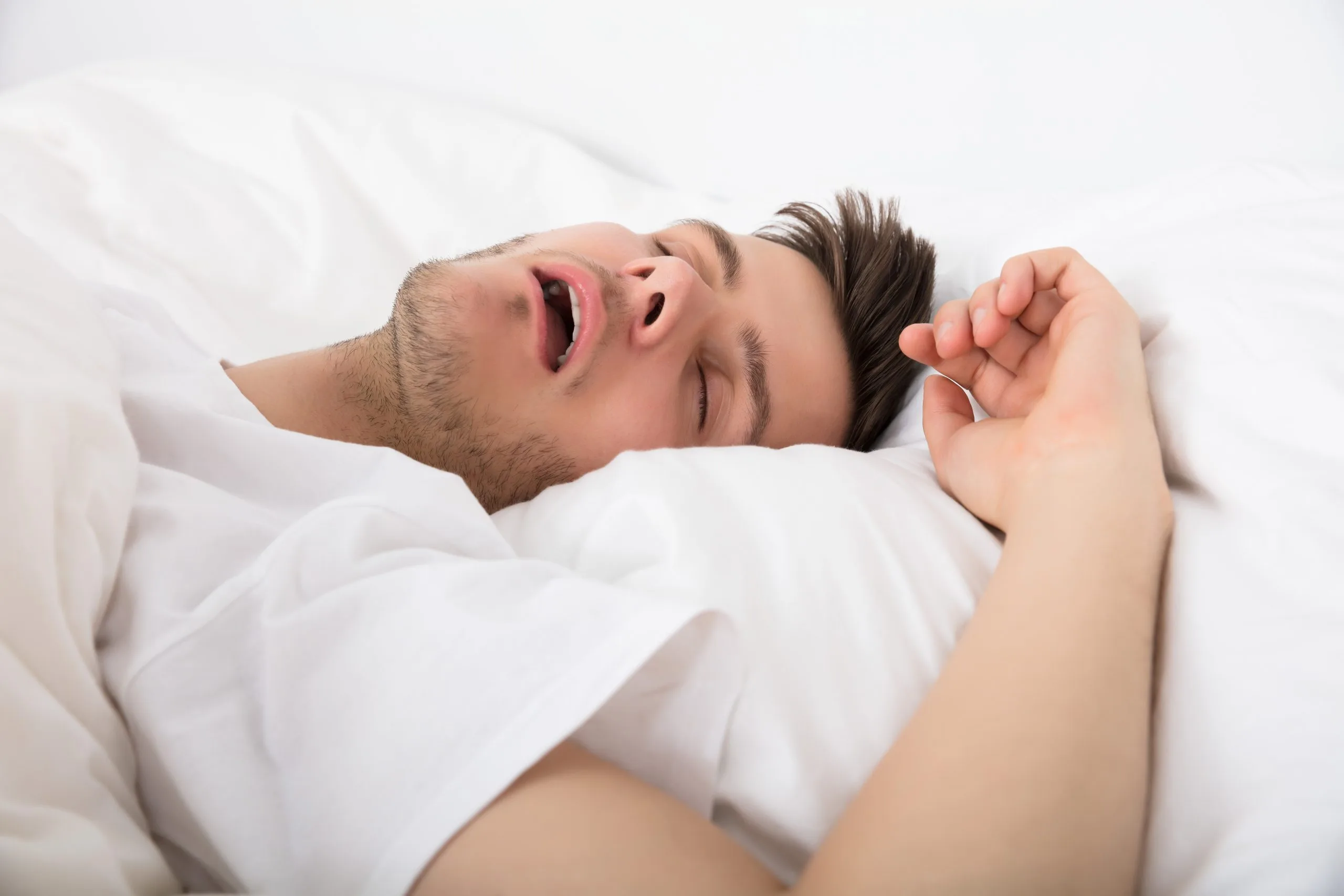
Yes, snoring can be a sign of a serious health problem, especially if it is loud, frequent, or accompanied by symptoms like gasping, choking, or daytime fatigue. While occasional snoring may be harmless, persistent snoring often points to underlying conditions such as obstructive sleep apnea (OSA), which is linked to high blood pressure, heart disease, and stroke. Understanding the cause of snoring is essential to determine whether it signals a more significant health issue.
What Is Snoring?
Snoring is the sound of partially obstructed airflow. During sleep, the muscles holding your nasal cavity, soft palate, throat, and tongue base open begin to relax. If the passage narrows enough, air moving through it makes the surrounding soft tissue flutter and vibrate.
Think of air rushing through a partly pinched straw. The tighter the pinch, the more turbulence, and the louder the sound – which is why snoring worsens on your back, with a cold, or after a couple of drinks.
Roughly half of adults snore at least occasionally. That statistic reassures a lot of people into ignoring it, but frequency, volume, and what else happens while you snore all matter.
Causes of Snoring
Anatomical Causes
A deviated septum, where the wall between the nostrils is off-center and restricts airflow on one or both sides
Enlarged turbinates – the ridged structures inside the nose that swell with allergies or irritation
Nasal polyps or chronic sinus inflammation
Collapsed or weak nasal valves, the narrowest part of the nasal airway
Enlarged tonsils or adenoids
A long or thick soft palate and elongated uvula (the dangling tissue at the back of the throat)
A recessed chin or small lower jaw, which pushes the tongue base backward
Tongue position – on your back, the tongue can fall backward into the airway
Lifestyle and Health Factors
Excess weight, especially fat deposits around the neck
Alcohol before bed, which over-relaxes throat muscles
Smoking, which inflames and swells the upper airway lining
Sedatives and some sleep medications
Sleeping flat on your back
Chronic nasal congestion from allergies, rhinitis, or sinus infections
Sleep Disorders
Many patients have more than one cause stacked together. Someone with a deviated septum and seasonal allergies who sleeps on their back after a glass of wine has four separate reasons for turbulent airflow.
Is Snoring a Sign of a Serious Health Problem?
Snoring becomes a genuine medical concern when it reflects repeated airway collapse, oxygen drops, and fragmented sleep. Those three things put measurable strain on the cardiovascular system and the brain, night after night, for years.
Occasional vs. Chronic Snoring
Occasional snoring happens a few nights here and there, usually tied to something temporary: a head cold, a sinus infection, an allergy flare, alcohol, or an odd sleeping position. It resolves when the trigger goes away, though it can still disrupt a partner’s sleep.
Chronic or habitual snoring happens most nights, month after month or year after year, regardless of position or congestion. It is loud enough to be heard through a wall or closed door, and it may be worsening over time.
When to Be Concerned About Snoring
Schedule an evaluation if any of the following apply to you or your partner:
Witnessed pauses in breathing. A partner says you stop breathing for several seconds, then gasp or snort back to life.
Choking or gasping awakenings. You wake suddenly feeling like you cannot get air.
Excessive daytime sleepiness. You doze off at your desk, in meetings, while reading, watching TV, or – most dangerously – behind the wheel.
Loudness and frequency. Snoring heard through closed doors that consistently disrupts your partner’s sleep.
Morning headaches that fade within an hour or two of getting up, plus a sore throat or a persistently unrested feeling.
High blood pressure, especially if it is hard to control with medication.
Atrial fibrillation or other heart rhythm problems.
Type 2 diabetes, worsening blood sugar control, or diagnosed heart disease.
Mood changes, memory trouble, or a shorter fuse than usual.
Snoring in a child, along with mouth breathing, restless sleep, bedwetting, or behavior and attention problems at school.
Snoring that suddenly worsens or changes character.
The presence of any two items on this list is reason enough to get tested rather than guess.
How Doctors Diagnose Snoring and Related Conditions
Dr. Ben Cilento’s approach is to identify where the obstruction is happening, because treatment for a nasal blockage is completely different from treatment for a collapsing tongue base.
A typical workup includes:
History. How long and how loudly you have snored, witnessed breathing pauses, daytime sleepiness, weight history, alcohol use, medications, and allergy or sinus symptoms. Bring your bed partner – they have information you do not.
Nasal and throat examination. A detailed exam of the entire upper airway, often with a small flexible endoscope passed through the nose to view the septum, turbinates, nasal valves, palate, tonsils, and tongue base. It takes a few minutes and shows exactly where the airway narrows.
Sleep testing. An at-home sleep study records breathing patterns, oxygen levels, heart rate, and snoring while you sleep normally at home – a convenient option for diagnosing apnea and grading its severity.
Allergy evaluation. If congestion is a major driver, allergy testing can identify triggers worth treating directly.
Additional assessment. Some patients benefit from imaging or a hearing and balance evaluation if related symptoms are present.
You can also start with our online sinus quiz to gauge how much your nasal symptoms may be contributing.
Treatment Options for Snoring
Treatment is matched to the cause. Texas Sinus and Snoring offers a full range of options, from conservative changes to in-office procedures to implanted therapies.
Lifestyle and Behavioral Steps
Sleep on your side rather than your back
Elevate the head of the bed several inches
Avoid alcohol and sedatives within three to four hours of bedtime
Lose weight if excess weight is a factor
Stop smoking
Treat nasal allergies aggressively during Spring’s long pollen seasons
Keep a consistent sleep schedule
Treating Nasal Obstruction
When the nose is the problem, opening it often quiets snoring dramatically:
Septoplasty – straightens the cartilage and bone of a deviated septum to improve airflow through both nostrils
Turbinate reduction – reduces chronically swollen turbinates blocking airflow
Nasal valve reconstruction – repairs and supports a collapsing or weak nasal sidewall, a common and often overlooked cause of obstruction
ClariFix® cryotherapy – an in-office treatment using cold temperatures to calm overactive nasal nerves and reduce chronic rhinitis symptoms
Balloon sinuplasty or endoscopic sinus surgery – minimally invasive options for underlying chronic sinus disease
Palate-Level Treatments
Oral appliances – custom mouthpieces that hold the lower jaw slightly forward, pulling the tongue away from the back of the throat
AIRLIFT procedure – a hyoid suspension procedure that addresses tongue base collapse directly
Implanted Nerve Stimulation for Sleep Apnea
For patients with moderate to severe OSA who cannot tolerate CPAP:
Most patients do not need everything on this list. Many need one well-chosen treatment aimed at the actual site of obstruction – which is why accurate diagnosis comes first.
When to Seek Medical Advice
Make an appointment if your snoring is loud most nights, if anyone has seen you stop breathing, if you are tired during the day despite adequate time in bed, or if you have high blood pressure, heart disease, or diabetes alongside snoring. Parents should have a child evaluated for snoring combined with mouth breathing, restless sleep, or attention problems.
Do not wait for symptoms to become dramatic. Sleep apnea develops gradually, and people adapt to feeling tired without realizing how much function they have lost.
Location: 2940 Farm to Market 2920, Spring, TX – serving the greater Spring area
Phone: 346-413-9313
Provider: Dr. Ben Cilento, a board-certified ENT surgeon
Scheduling: Request an appointment online, and our team will follow up by phone and text to confirm your visit or offer alternative times
Request an Appointment
Conclusion
So, is snoring a sign of a serious health problem? It can be. Occasional snoring tied to a cold or a late drink is usually harmless, but loud snoring most nights – especially with witnessed breathing pauses, gasping, morning headaches, or daytime exhaustion – often points to obstructive sleep apnea or a treatable nasal blockage.
A physical exam of the airway and an at-home sleep study can tell you exactly what is happening. From there, treatments range from simple lifestyle adjustments to nasal procedures like septoplasty, oral appliances, and implanted nerve stimulation such as Inspire sleep therapy.
Quieter nights and better rest usually start with one appointment.
Schedule Your Snoring Evaluation