Allergy Testing in
Houston, TX

At Texas Sinus and Snoring in Houston, TX, we offer comprehensive allergy testing to pinpoint the exact allergens causing your discomfort. Our goal is to provide you with accurate diagnoses and effective solutions to help you breathe easier and find lasting relief from bothersome allergy symptoms.

How Does Allergy Testing Work?

Allergy testing is a crucial step in understanding and managing allergic reactions. It helps identify specific substances, or allergens, that trigger your body’s immune response, leading to symptoms like sneezing, nasal congestion, itching, and sinus headaches. By accurately identifying these triggers, we can develop a personalized treatment plan tailored to your unique needs, moving beyond temporary symptom relief to addressing the root cause of your allergies.

Conditions Diagnosed with Allergy Testing

Allergy testing is instrumental in diagnosing a wide range of conditions linked to environmental and food allergens. Our testing can help uncover the triggers behind persistent issues, such as chronic rhinitis, recurrent sinusitis, seasonal allergies, and even some types of sinus headaches. Identifying these specific allergens allows for targeted treatment, leading to significant improvement in your quality of life.

Common Types of Allergy Tests

To provide a comprehensive understanding of your allergic sensitivities, Texas Sinus and Snoring utilizes various testing methods. The most common and reliable approaches include skin tests, which offer quick results, and blood tests, which can be useful in certain situations. Our expert team will recommend the most appropriate testing method based on your symptoms and medical history.

Skin Prick and Patch Testing
At Texas Sinus and Snoring, we use a two-part allergy skin testing method, which the AAFA considers highly reliable and cost-effective for checking for airborne and seasonal allergies.

Part 1: Skin Prick Test (Scratch Test)

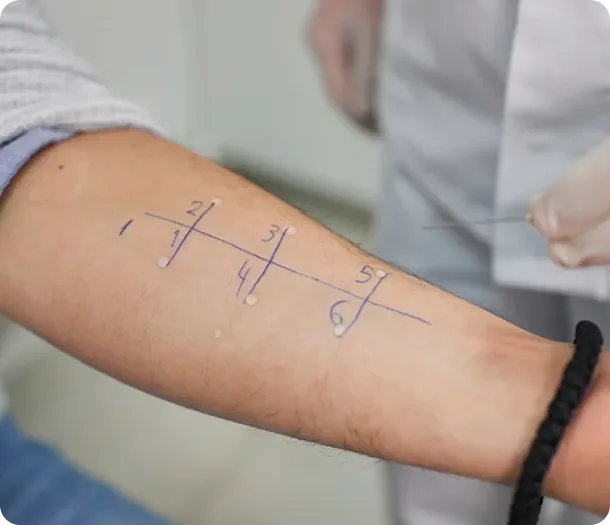
The first part involves a skin prick test, in which a small amount of allergen is applied to your skin using a tiny prick. This process is relatively painless and allows us to test for numerous allergens simultaneously. Within 15-20 minutes, we can often identify immediate reactions, which appear as a red, swollen area similar to a mosquito bite.

Part 2: Intradermal Retest

If an allergen shows a negative result on the initial prick test, we may perform an intradermal retest. This involves injecting a small amount of the allergen just beneath the skin’s surface to confirm if it was truly negative or a delayed positive. This careful, two-step approach minimizes the risk of severe reactions while ensuring accurate results.

Blood and Laboratory Testing

In addition to skin tests, blood tests are another valuable tool for allergy diagnosis. These tests measure the amount of specific antibodies (IgE) in your blood that are produced in response to allergens. Blood testing can be particularly useful for patients who cannot undergo skin testing due to certain skin conditions, medications, or a history of severe allergic reactions. While skin tests are our primary method, blood tests offer an alternative for comprehensive assessment.

Preparing for Your Allergy Test

Proper preparation ensures the most accurate allergy test results. Our team will provide detailed instructions specific to your situation, but there are some general guidelines to follow.
Medications to Temporarily Discontinue
Certain medications, especially antihistamines (both oral and topical), can interfere with skin test results. You will typically be advised to stop taking these medications for a specific period before your appointment.
Avoid applying lotions or creams to your skin on the day of the test. You can eat and drink normally unless otherwise instructed. Our staff will review all necessary preparations with you to ensure a smooth and effective testing process.
The Allergy Testing Procedure
When you come for your allergy test at Texas Sinus and Snoring, our experienced staff will guide you through each step.

Skin Testing

For skin testing, allergens are applied to your forearm or back. You’ll relax for a short period while we monitor for reactions.

Blood Testing (Optional)

If a blood test is required, a small blood sample will be taken. The entire process is designed to be as comfortable and efficient as possible, with our team available to answer any questions you may have.

Interpreting Allergy Test Results

Once your allergy test is complete, our specialists will carefully interpret the results. For skin tests, we evaluate the size and intensity of any reactions. For blood tests, we analyze the antibody levels. We ...

Treatment and Management Strategies
Based on your allergy test results, Texas Sinus and Snoring will develop a comprehensive strategy to manage your allergies.
Avoidance
Avoidance is the first and most important step in reducing allergy symptoms. Based on your test results, we help you identify specific triggers and create practical ways to minimize exposure in your daily environment.
Medication management focuses on using the right treatments to control and reduce allergy symptoms. This may include antihistamines, nasal sprays, or other prescriptions tailored to your specific allergy profile.
Allergy shots (injections) work by gradually training your immune system to become less sensitive to allergens. Over time, this can lead to long-term symptom relief and a reduced need for medication.
Allergy drops are a convenient alternative to injections that can be taken at home under a prescribed plan. They help desensitize your immune system by delivering small, controlled doses of allergens over time.

Determining Candidacy for Testing

Proper preparation ensures the most accurate allergy test results. Our team will provide detailed instructions specific to your situation, but there are some general guidelines to follow.

Experience the Benefits of Allergy Testing

Allergy testing provides valuable insight into what is triggering your symptoms, allowing for a more precise and effective treatment plan. By identifying specific allergens, patients can take targeted steps toward long-term relief and improved quality of life.

Cost of Allergy Testing in Houston, TX

The cost of allergy testing in Houston typically ranges from $250 to $600, though pricing can vary based on the specific tests performed and individual patient needs. Our team can discuss pricing details and help you understand your financial options. We recommend contacting us for a personalized quote.

Looking for an Allergy Doctor in Houston?

Dr. Cilento’s passion is comprehensive care of the sinuses. While you may need surgery or a procedure to repair damaged sinuses, part of ensuring the damage doesn’t worsen is addressing seasonal allergies. Dr. Cilento is not only an allergy doctor but also a member of the AAOA. He is considered an otolaryngic allergist. Allergy testing is done right in our Spring, Texas office, just outside of Houston.

We treat allergies with immunotherapy. To learn more about allergy treatment, click the button below.

Frequently Asked Questions (FAQs)

What are common allergy symptoms?
Common allergy symptoms include sneezing, nasal and eye itching, runny or stuffy nose, and post-nasal drip. These can vary depending on the allergen and the individual.
Allergy testing identifies the specific triggers of your symptoms, enabling targeted avoidance strategies and personalized treatment plans, such as immunotherapy, to provide lasting relief.
While there isn’t a “cure” in the traditional sense, treatments like immunotherapy can significantly reduce your sensitivity to allergens, leading to long-term relief and often reducing or eliminating the need for daily medication.
After your allergy test, our team will review your results with you and discuss the next steps, which may include lifestyle adjustments, medication, or initiating an immunotherapy program tailored to your specific allergies.